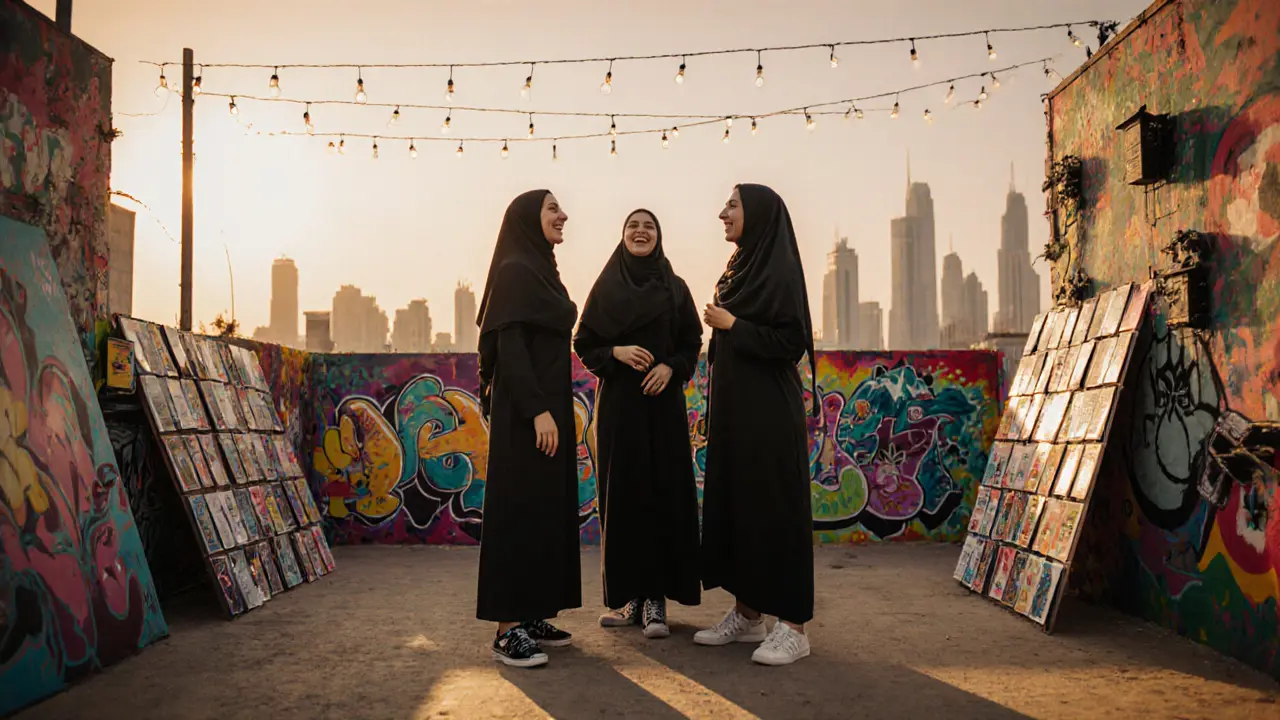
You’ve seen the photos: young women in sleek abayas walking into rooftop lounges, laughing in designer sneakers at Alserkal Avenue, running their own startups in Business Bay, or dancing at private beach parties under string lights. These aren’t just tourists or expats. These are Dubai girls-local Emiratis and long-term residents who are quietly, powerfully, reshaping what the city looks like today.
Forget the old stereotypes. Dubai isn’t just about luxury malls and desert safaris anymore. It’s about a new generation of women who are building businesses, leading art collectives, launching podcasts, and breaking norms-not with protests, but with presence.
Who Are Dubai Girls Really?
Dubai girls aren’t a monolith. They’re university students from the American University of Sharjah, tech founders from Dubai Future Foundation programs, fitness influencers with 200K followers on Instagram, mothers running home-based bakeries, and Emirati artists showing work at the Dubai Opera. Many grew up bilingual, raised on YouTube tutorials and Netflix, but still celebrate Eid with traditional henna and dates.
What ties them together? A boldness that doesn’t need to shout. They wear hijabs with Balenciaga boots. They code in Arabic and English. They open cafés in Jumeirah that serve matcha lattes and kunafa ice cream. They don’t ask for permission-they just do it.
Why This Matters Now
Dubai’s population is young. Over 60% of residents are under 35. And nearly half of them are women. In 2023, the UAE ranked #1 in the Arab world for female entrepreneurship, with over 37% of startups led by women. That number’s still climbing.
These women aren’t waiting for change. They’re building it. Take Al Tayer Group’s new retail incubator-launched in 2024-to support female-led fashion brands. Or She Leads, a Dubai-based nonprofit that’s trained over 1,200 young women in leadership skills since 2022. These aren’t government PR campaigns. These are real ecosystems growing from the ground up.
The New Dubai Scene: Where They’re Seen
Where do you find these women? Not just in malls. Go to:
- Alserkal Avenue-art studios, indie bookshops, and pop-up galleries where Emirati artists sell prints and poetry zines.
- City Walk-cafés with women-only seating areas, where you’ll see groups of friends debating TikTok trends over cold brew.
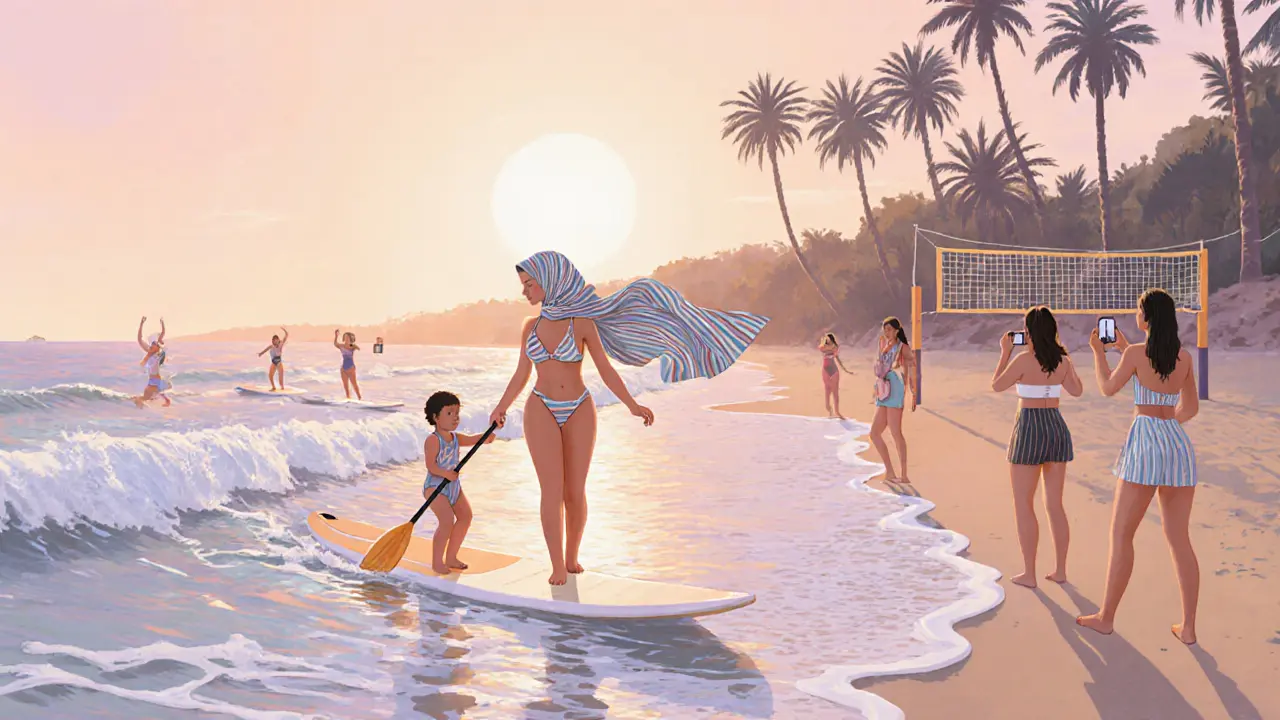
- La Mer Beach-on weekends, you’ll spot young women in swimwear and headscarves playing volleyball, snapping selfies, or teaching kids to paddleboard.
- Dubai Design District (d3)-home to over 50 female-founded design studios, from sustainable fashion to ceramic tableware.
- Al Barsha-where a 24-year-old Emirati launched a vegan meal prep service that now delivers to 800 homes weekly.
These aren’t tourist spots. These are living, breathing parts of daily life-places where Dubai girls don’t just visit, they belong.
What They’re Changing
They’re changing the rules without making a big deal out of it.
Before, women in public spaces were often expected to be quiet, reserved. Now? You’ll hear them negotiating contracts in Arabic-accented English, arguing about politics on Twitter threads, or leading yoga classes in Burj Khalifa’s shadow. One 28-year-old told me: “I don’t need to prove I’m strong. I just show up-and that’s enough.”
They’re also reshaping beauty standards. The rise of modest fashion brands like Modanisa and Amal Collection isn’t about covering up-it’s about expressing identity on their own terms. No more “Western vs. traditional” binaries. It’s all blended now.
How to Experience This Side of Dubai
If you want to see the real pulse of Dubai today, don’t just go to the Burj Khalifa. Try this:
- Visit Alserkal Avenue on a Friday afternoon-many studios offer free art walks with the creators.
- Book a table at Wahat Al Karama Café-run by a young Emirati woman who sources ingredients from local farms.
- Follow local influencers like @dubaigirlsdiary or @emirati.woman.ontheroad-they post real stories, not staged photos.
- Attend a She Leads or Women in Tech Dubai meetup. Most are open to visitors.
- Shop at Souk Al Bahar’s weekend pop-ups-where young designers sell handmade jewelry, candles, and art.
You’ll notice something: no one’s performing for you. They’re just living.
What to Expect When You Meet Them
Don’t expect the “exotic” stereotype. Most Dubai girls you meet will be polite but direct. They’ll ask you about your work. They’ll want to know if you’ve tried the new falafel place in Jumeirah. They’ll correct you if you say “Arab women” when they’re Emirati.
They’re proud of their culture-but not defensive. They’ll show you how to make kunafa from scratch. They’ll explain why they don’t drink alcohol but still love Friday night parties with music. They’re not trying to impress you. They’re just being themselves.
How to Support Them
You don’t need to “save” them. You just need to show up.
- Buy from their businesses-whether it’s a handmade scarf or a digital course on Arabic calligraphy.
- Share their stories on social media-not as “inspiration porn,” but as real people doing real work.
- Ask questions. Not “Do you wear the hijab because you have to?” but “What does your style mean to you?”
- Respect boundaries. If they don’t want to talk about religion or marriage, change the subject.
Support isn’t about pity. It’s about partnership.
Dubai Girls vs. Traditional Stereotypes
| Old Stereotype | Reality Today |
|---|---|
| Women stay home, men lead | 42% of Dubai’s tech startups are founded by women (Dubai Chamber, 2024) |
| Only expats shape the scene | 78% of young female entrepreneurs in Dubai are Emirati (UAE Ministry of Economy) |
| Modest fashion = outdated | Dubai is now the #1 modest fashion hub in the Middle East |
| Women are silent in public | Women make up 58% of university graduates in the UAE |
| They’re defined by their relationship to men | Over 1,000 female-led businesses operate independently in Dubai’s free zones |
Frequently Asked Questions
Are Dubai girls only Emirati?
No. While many are Emirati, the term also includes long-term female residents-like Indian, Filipino, Egyptian, and British women-who’ve lived in Dubai for over a decade and are deeply embedded in the culture. They’re part of the fabric too. The movement isn’t about nationality-it’s about belonging and contribution.
Is this just a trend?
Not even close. This is structural. Dubai’s 2030 vision explicitly includes gender equity as a core goal. The government funds female-led startups. Schools teach entrepreneurship to girls from age 12. Universities have mentorship programs. This isn’t Instagram noise-it’s policy, education, and economic strategy working together.
Do they face pushback?
Of course. Some older generations still expect women to prioritize marriage over careers. Social media can be harsh. But these women have built networks of support-mentors, co-founders, online communities-that help them navigate it. They’re not waiting for approval. They’re building their own tables.
Can tourists interact with them?
Absolutely-but respectfully. Don’t assume they want to be photographed. Don’t ask invasive questions about marriage or religion. Just be curious. Say hello. Compliment their coffee order. Ask what they’re working on. Most will respond warmly. They’re used to outsiders seeing only the surface. They’re ready to show you the depth.
What’s next for Dubai girls?
They’re moving beyond visibility into leadership. More are entering politics, law, and STEM. One 25-year-old just became the youngest female judge in the UAE. Others are launching AI startups focused on Arabic-language education. The next decade won’t be about proving they belong-it’ll be about rewriting the rules of what’s possible.
Final Thought
Dubai girls aren’t lighting up the city because they’re trying to be noticed. They’re lighting it up because they’re living fully-on their own terms, in their own way. And that’s the most powerful kind of glow.
Next time you’re in Dubai, skip the crowded observation decks. Walk into a quiet art studio. Sit at a café with no English menu. Listen. You might just hear the future speaking-softly, confidently, and without apology.
Comments
James Foster November 6, 2025 at 00:12
I’ve been to Dubai three times, and honestly, I had no idea this was happening under the radar. I thought it was all malls and camel races. But after reading this, I’m planning a trip just to hit Alserkal Avenue and that vegan meal prep place in Al Barsha. These women are doing the work, and it’s so cool to see.
Also, the part about not asking if they wear the hijab because they have to? Big lesson learned. I’ll be asking what their style means to them instead. Thanks for this.
Amber Oravecz November 6, 2025 at 09:44
They’re not asking for permission. They’re just showing up.
Will Sophia November 7, 2025 at 12:44
This is one of the most well-researched, uplifting pieces I’ve read in a long time. The stats are solid, the examples are specific, and the tone is respectful without being preachy. I especially appreciated the breakdown of old stereotypes versus reality-it’s not just about progress, it’s about redefining what’s possible.
Also, the recommendation to visit Wahat Al Karama Café? Added to my travel list. I’ll be buying a coffee and asking the owner how she sources her ingredients. Small acts matter.
And yes, support isn’t pity-it’s partnership. Spot on.
Alex Alcantar November 7, 2025 at 17:40
Man i had no idea women in dubai were running so many startups and art spaces. I always thought it was just expats doing everything. But reading this makes me feel kinda dumb for not knowing sooner
Also that 25 year old judge? That’s wild. I hope more girls follow her path. And the part about kunafa ice cream? I need that in my life right now
Jacqueline Arnold November 8, 2025 at 02:43
Oh wow, so now we’re calling them ‘Dubai girls’ like they’re a viral TikTok trend? Cute. Let me guess-the next article will be ‘Tokyo Teens Are Changing Fashion’ and ‘Berlin Artists Are Rebooting Coffee Culture’? No, wait, those are real people with names and histories.
But sure, let’s romanticize a whole generation into a hashtag. ‘Dubai girls don’t ask for permission-they just do it.’ Oh, so they’re not allowed to ask? That’s the new empowerment? How progressive.
And let’s not forget the real story: these women are thriving because of government investment, not because they’re ‘quietly powerful.’ The state built the infrastructure. They didn’t magically appear in designer abayas. But hey, let’s keep the fairy tale going. #GirlBossDubai 🤡