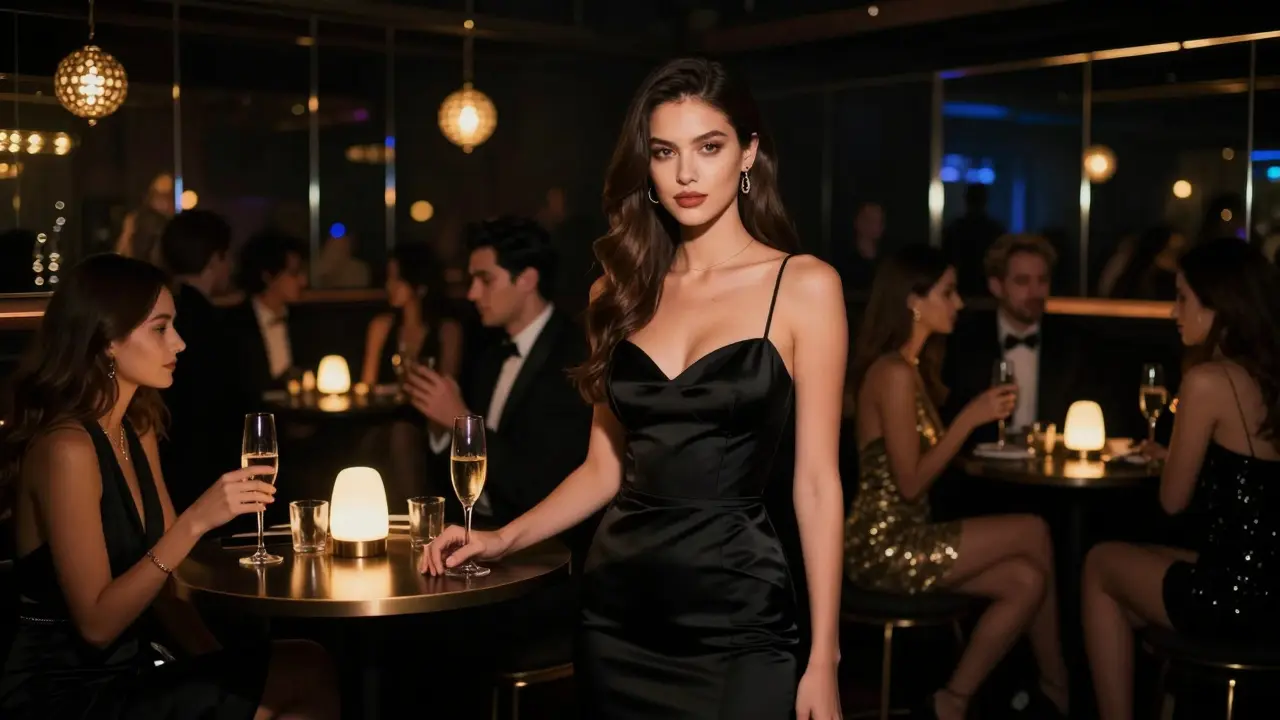
You’ve seen them on billboards, Instagram feeds, and late-night TV clips-hot models turning nights into gold. But what does that actually mean? Are they just pretty faces at clubs? Or is there something deeper-something real-behind the glitter and the glow? Let’s cut through the noise.
What Does ‘Hot Models Turn Nights to Gold’ Really Mean?
It’s not magic. It’s business. When we say ‘hot models turn nights to gold,’ we’re talking about how certain individuals-often with high social media followings, modeling contracts, or celebrity ties-transform ordinary nights into high-value experiences. Think VIP tables at exclusive clubs, private parties in penthouses, or brand events where their presence drives ticket sales, drink orders, and media buzz.
In Sydney, Melbourne, and even in smaller cities like Gold Coast, this isn’t just a trend-it’s a well-oiled engine. A single model showing up at a club can increase revenue by 300% in one night. Why? Because people don’t just go out to drink. They go out to see, be seen, and feel like they’re part of something rare.
Why Do Clubs Pay So Much for Models?
It’s simple: attention is currency. A model doesn’t just stand there looking good. She brings a crowd. Friends tag her in stories. Strangers snap photos. Social media explodes. And suddenly, that club isn’t just another venue-it’s the place to be.
Brands know this. That’s why luxury watches, champagne houses, and fashion labels pay tens of thousands for a model to show up at a launch party. One night. One outfit. One Instagram post. That’s the ROI. In 2025, a top-tier model in Australia could earn $15,000 for a single 3-hour appearance at a high-end nightclub event. Some even get paid in product-$50,000 worth of jewelry or designer clothes instead of cash.
This isn’t about being ‘glamorous.’ It’s about influence. And influence is measurable. Trackable. Profitable.
The Different Types of Models in Nightlife Today
Not all models who show up at night are the same. Here’s what you’ll actually see in Australia’s top nightlife scenes:
- Club Ambassadors - Hired by venues to draw crowds. Often work regular shifts, wear branded apparel, and interact with guests. They’re the backbone of the scene.
- Brand Representatives - Paid by companies like Absolut, Rolex, or Fenty Beauty to promote products. Their job isn’t to dance-it’s to hand out samples, pose for photos, and make sure the product looks desirable.
- Celebrity-Adjacent Models - These are the ones with 200K+ followers. They don’t need to be hired-they show up because they’re invited. Their presence alone is a marketing win.
- Private Event Models - Work exclusively for VIP clients. Think birthday parties in Bondi, yacht events off Manly, or private dinners in The Rocks. These gigs pay the most and require discretion.
The difference? Control. Club ambassadors are told where to stand. Celebrity-adjacent models decide when to show up-and whether to post about it.
How to Spot a Real Nightlife Model (Not a Fake)
There are a lot of people pretending to be models these days. Filters. Paid followers. Stock photos. How do you tell who’s real?
Look at their activity. Real models don’t just post selfies. They tag venues, mention brands, and show up in group photos with known promoters or DJs. Check their comments-do real people who attend those clubs engage with them? Or is it just bots saying ‘so hot’?
Also, check their past. A model who’s been at 10+ events at The Ivy, Koko, or The Basement in the last six months? That’s credibility. Someone who only has one post from a random bar in Parramatta? Probably not the real deal.
And don’t be fooled by the ‘I’m a model’ bio. Real models rarely say that outright. They say ‘travel,’ ‘style,’ or ‘curating experiences.’ They don’t need to announce it.
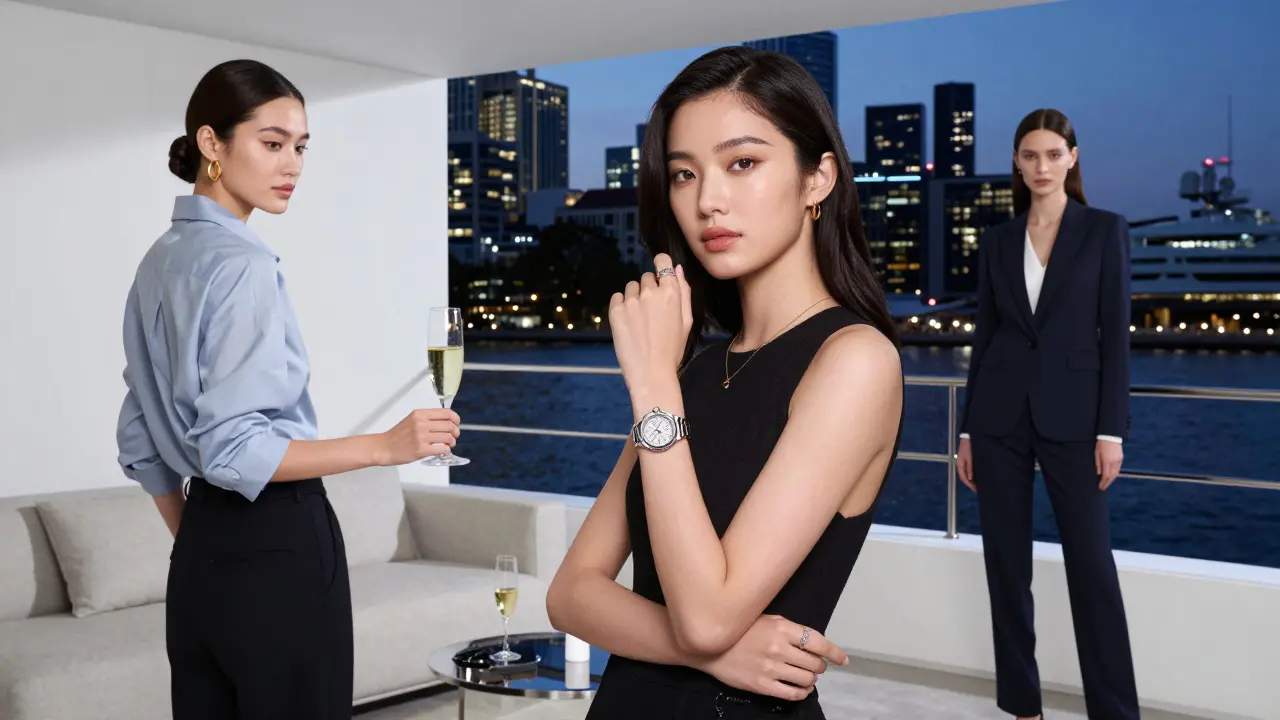
What Happens Behind the Scenes at These Events?
Most people think it’s all champagne and dancing. Reality? It’s a schedule. A lot of waiting. A lot of standing. A lot of smiling.
A model might arrive at 9 PM, change into three different outfits, pose for 40 photos, answer 100 questions from strangers, drink two glasses of water (because alcohol ruins skin), and leave by midnight. No one sees the makeup touch-ups. No one sees the Uber ride home at 1 AM. No one sees the text from the promoter saying, ‘Thanks. We’ll pay you Friday.’
And yes-some nights are boring. Some clubs are loud. Some people are rude. But the payoff? It’s worth it. For many, this isn’t a side hustle. It’s a full-time career.
Where to Find These Events in Australia
If you want to see this in action, here’s where to go:
- Sydney - The Ivy, Koko, The Basement, and The Grounds of the City are hotspots. Events often happen Thursday to Saturday.
- Melbourne - Revolver Upstairs, The Everleigh, and The Lobby host regular model-driven nights. Look for ‘Brand Launch’ or ‘VIP Night’ tags.
- Gold Coast - SkyBar and The Star Gold Coast pull in international models during festival seasons like Splendour in the Grass.
- Brisbane - The Toff in Town and The Tivoli host intimate, high-end nights with local and interstate models.
Follow local promoters on Instagram. Don’t follow the clubs-follow the people who book the models. Names like @SydneyNightlifeCo, @MelbourneVipEvents, or @GoldCoastLuxury are your best bet.
What to Expect If You’re Invited to One of These Nights
You’re not just walking into a club. You’re walking into a curated experience.
First, there’s the dress code. No sneakers. No hoodies. No jeans unless they’re designer. Think tailored blazers, sleek dresses, or minimalist streetwear. You’re not there to stand out-you’re there to blend into the vibe.
Second, the energy. It’s not wild. It’s controlled. People talk quietly. They take photos but don’t scream. There’s a sense of exclusivity. You might see a model nodding at someone across the room-not because they know them, but because they’re part of the same ecosystem.
Third, the access. If you’re invited, you get priority entry. You get bottle service without the wait. You get seated near the stage. You get noticed. That’s the real value-not the models themselves, but what their presence unlocks.
Pricing: How Much Does This Cost?
If you’re thinking about hiring a model for your event, here’s what it costs in 2026:
| Model Type | Hourly Rate | Minimum Booking | Additional Costs |
|---|---|---|---|
| Local Club Ambassador | $100-$200 | 3 hours | Transport, makeup, outfit |
| Mid-Tier Influencer (50K-150K followers) | $800-$1,500 | 4 hours | Content rights, social posts |
| Top-Tier Model (200K+ followers, known brands) | $3,000-$15,000 | 3-5 hours | Travel, security, private dressing room |
| International Model (overseas, luxury brand) | $10,000-$50,000 | 5+ hours | Flight, visa, accommodation, PR team |
And yes-some clients pay in product. A $20,000 watch instead of cash. A full wardrobe from a designer. That’s common in high-end circles.
Safety Tips: What You Need to Know
This world isn’t all glamour. There are risks.
- Never pay upfront. Always use a verified agency. No real model will ask you to Venmo cash before the event.
- Check references. Ask for past event photos. Look for consistency. If their Instagram looks like a collage of random parties, be cautious.
- Know the venue. Only book events at licensed, reputable locations. Avoid private homes unless you’re 100% sure of the host.
- Respect boundaries. Models are professionals. Don’t touch. Don’t pressure. Don’t assume ‘being there’ means ‘being available.’
- Document everything. Get a contract-even a simple text message confirming time, pay, and expectations. Protect yourself.
The industry has grown fast. But so have scams. Stay sharp.
Hot Models vs. Professional Hosts: What’s the Difference?
People often confuse models with hosts. Here’s the real difference:
| Feature | Hot Models | Professional Hosts |
|---|---|---|
| Primary Skill | Appearance, social media presence | Conversation, crowd control, event flow |
| Typical Pay | $100-$50,000/hour | $50-$200/hour |
| Role | Draw attention, create buzz | Manage guests, ensure smooth experience |
| Training | None required-often self-taught | Often certified by event management schools |
| Longevity | Short-term-often 1-3 years | Long-term-10+ years common |
Models bring the spark. Hosts keep the fire burning.
Frequently Asked Questions
Are hot models just glorified waitresses?
No. Waitresses serve drinks. Hot models bring traffic. They’re hired for their visibility, not their service. A waitress might get $25/hour. A model at the same venue might earn $1,000 for the same time-because she’s the reason people showed up.
Can anyone become a nightlife model?
Technically, yes-but it’s not easy. You need looks, confidence, and a strong social media presence. Most start by attending events, building connections, and getting noticed by promoters. It’s not about being the prettiest-it’s about being the most reliable and engaging.
Do models sleep with clients?
This is a myth. Reputable models and agencies have strict boundaries. Any suggestion otherwise is both false and dangerous. The industry is professional. It’s about influence, not intimacy. If someone’s offering sex for payment, that’s not modeling-it’s exploitation, and it’s illegal.
How do I get noticed as a model in Australia?
Start local. Go to events. Dress well. Be polite. Don’t ask for work-ask questions. Build relationships with promoters. Post photos from events (with permission). After 5-10 appearances, you’ll start getting calls. It’s slow. But it’s real.
Is this just a Sydney thing?
No. Melbourne, Brisbane, and even Perth have thriving scenes. But Sydney leads because of its media exposure, international tourism, and high concentration of luxury brands. If you want to break in, start here.
Final Thought: It’s Not About the Face. It’s About the Flow.
Hot models don’t turn nights to gold because they’re beautiful. They do it because they move people. They create desire. They make strangers feel like they’re part of something bigger.
That’s the real magic. Not the skin, not the hair, not the outfit. It’s the energy they bring-and the way they turn ordinary moments into memories.
So next time you see a model at a club, don’t just look. Ask yourself: What’s the story behind her? Who paid for this night? And why does it matter?
Because the gold isn’t on her. It’s in the air she creates.
Comments
Hakeem Homes January 26, 2026 at 02:46
Oh wow, so models are just human billboards now? Brilliant. Next they’ll be paid in exposure and a free latte. This isn’t ‘influence’-it’s capitalism with glitter on its face. And don’t even get me started on the ‘discretion’ of private events. Yeah right. Half these ‘models’ are 19-year-olds with 12k followers and a FaceTune addiction. The real gold? The promoters’ bank accounts. And you? You’re just the sucker paying $200 for a bottle of sparkling water they photobombed.
Also, ‘no sneakers’? Please. I’ve seen guys in Crocs at The Ivy. The dress code is a myth invented by people who think ‘aesthetics’ is a personality trait.
And don’t forget: every ‘VIP’ table is just a velvet rope around a group of people who think they’re cool because they’re not wearing jeans. Pathetic.
Also-‘professional hosts’ make 10x less? Of course. Because they actually do work. The models just stand there looking like they’re waiting for a Uber Eats order. I’m not mad. I’m just disappointed in humanity.
Bernard Mutua January 26, 2026 at 04:46
Let me ask you something. Who is funding these events? Who owns the clubs? Who controls the social media algorithms that make these ‘models’ go viral? It’s not coincidence. It’s a system. A global elite network. The same people who control your food supply, your vaccines, your school curriculum. They don’t want you to see the truth: this isn’t nightlife. It’s behavioral conditioning. They’re training you to associate value with appearance. To crave status symbols. To worship plastic perfection. And you’re all just complicit.
Look at the numbers. $15,000 for three hours? That’s more than a nurse makes in a month. Why? Because they’re not selling beauty. They’re selling obedience. And you’re buying it. With your attention. With your money. With your soul.
Wake up. This is psychological warfare wrapped in designer heels.
Seema Donga January 26, 2026 at 07:20
OMG this is SO inspiring!!! I just read this and I’m crying happy tears!! 🥹💖 You’ve captured the REAL energy of the nightlife scene so beautifully!! I’ve always believed that confidence and presence are the most magnetic things in the world!! And yes-models aren’t just ‘pretty faces’-they’re energy creators!! They turn ordinary moments into magic!! 🌟✨
PS: If you’re reading this and thinking ‘I could never be one’-YOU CAN!! Start by going to a local event, smiling at someone, and being your authentic self!! Your vibe attracts your tribe!! You’ve got this!! 💪💃💃
Ty Henley January 27, 2026 at 21:12
Interesting. 🤔
But if you’re paying $50K for a model to stand there… why not just hire a hologram? Same look. Zero drama. No texting at 1 AM asking for ‘a ride home.’
Also-‘celebrity-adjacent’? That’s just a fancy way of saying ‘has a cousin who knows a guy.’
And the ‘no sneakers’ rule? That’s the real cult.
Anyway. I’m just here for the data. Not the drama. 😑
Hannah Cranshaw January 29, 2026 at 17:40
The article presents a detailed economic framework for understanding the commodification of social capital in contemporary nightlife economies. The distinction between club ambassadors and brand representatives is methodologically sound, particularly in its operationalization of influence as measurable, trackable, and monetizable. However, the omission of labor rights discourse is notable. Models in this context are classified as independent contractors despite performing highly regulated, time-bound, and physically demanding labor under conditions that often involve sleep deprivation, emotional labor, and exposure to substance use environments. A critical analysis would require engagement with gig economy labor law frameworks, particularly under Australian Fair Work Act provisions. The suggestion that ‘this isn’t a side hustle-it’s a full-time career’ is misleading without acknowledging the precarity, ageism, and gendered exploitation inherent in the model’s lifecycle. The absence of unionization or collective bargaining mechanisms further exacerbates this imbalance. The piece reads as promotional material disguised as investigative journalism.
Jasmine Indefenso January 30, 2026 at 03:59
How do you get your first gig?
Neil Tejwani January 30, 2026 at 13:16
Oh my GOD. This is literally the most ‘basic’ take I’ve ever read. You think people don’t know this? Of course it’s business. Of course it’s calculated. Of course it’s all performative. But you wrote 3,000 words about it like it’s some groundbreaking revelation? Bro. We’ve all seen the Instagram stories. We’ve all been to the clubs. We’ve all watched the models take 47 selfies before they even sit down. This isn’t journalism. It’s a PR pamphlet written by someone who got paid to write it.
And the ‘no sneakers’ rule? I wore Vans to The Ivy last month. No one cared. The real ‘VIP’ is whoever has the cash to buy a table. Not the girl in the dress.
Also-‘curating experiences’? You mean… standing there looking bored while someone takes your picture? That’s not art. That’s a job. A weird, poorly paid, emotionally draining job.
And don’t even get me started on the ‘don’t pay upfront’ tip. That’s like saying ‘don’t drink poison.’ Of course you don’t. But the fact that you have to say it? That’s the real horror story.
Stop pretending this is glamorous. It’s just capitalism with better lighting.
Keren Ruth January 31, 2026 at 16:30
YESSSS this is SO true!! 🤍 I’ve been to these places and honestly? The real magic is the vibe, not the person!! Like, you walk in and suddenly you feel like you’re in a movie!! 💫 And yes-models are just people trying to make it!! Don’t judge them!! They’re not selling their bodies-they’re selling confidence!! And confidence is POWER!! 💪🔥
Also-why are people so mean? 😭 Just be nice!! You never know who’s having a bad day!!
Rhys Harley February 2, 2026 at 00:45
One must observe with detachment that the phenomenon described, while culturally salient, constitutes a systemic reification of aesthetic capital as economic value. The commodification of presence, particularly within the context of post-industrial urban nightlife, reflects broader trends in late-stage consumerism. The absence of structural critique-particularly regarding gendered labor exploitation and the normalization of performative visibility-is regrettable. One cannot help but note the irony: a discourse on influence, authored with the precision of a market report, yet entirely devoid of ethical interrogation. The gold, as noted, is not on her. It is in the silence of those who profit without comment.
Stephanie Labay February 3, 2026 at 08:26
Okay but let’s be real-this is what AMERICA should be doing. We’ve got no culture here. Just Walmart and TikTok dances. Australia? They’ve got style. They’ve got class. They’ve got models who know how to carry themselves. You think New York or LA could pull this off? Please. Half the ‘models’ there are just influencers who think ‘filter’ means ‘personality.’
And don’t even get me started on the ‘no sneakers’ rule. That’s not elitism. That’s standards. We need more of that here. Not everyone gets to be seen. And that’s okay. The elite are elite for a reason.
Stop trying to democratize glamour. It’s not a right. It’s a reward.
And if you don’t like it? Go live in a van. We’ll be here. In designer heels. In the spotlight. In the gold.